



Stay on top of trends and issues impacting manufacturing today. Get valuable news from our team of engineers and market experts. The Edge presents insight from thought leaders at the world’s premiere metal conveyor belt manufacturer.
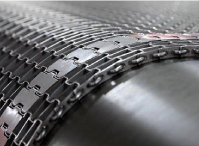
Protecting Against Abrasion & Plastic Contamination
This is the second in our four part series “Metal Matters.” To see our first installment, visit “Extinguishing Fire Hazards Posed by Plastic.”
A second advantage of metal over plastic belts is stainless steel’s inherent durability, resistance to abrasion and ability to operate at higher temperature applications. Plastic belt abrasion leads to both product contamination and mechanical failure. The internal breakdown of polymeric links found in plastic makes surfaces brittle and creates shards that break off, and into, food during processing. This is especially troublesome as plastic is not detectable.
The most commonly used plastic in belt conveyors is polypropylene, which can only be used in environments where temperatures do not exceed 220 degrees Fahrenheit. While nylon has a higher temperature range, it is also hygroscopic and absorbs moisture with temperatures over 212 degrees Fahrenheit resulting in a brittle belt as well as an environment ideal for bacterial growth.
